PDRS calculator
Final permanent-disability rating
2005 Schedule: FEC rank → age adjustment → occupational adjustment → final PD.
Decision support. ChironAI drafts the regulatory reasoning described on this page end to end. The treating physician reviews the reasoning, edits it, and attests before anything reaches a payer, an attorney, or the chart. ChironAI does not make a regulatory clearance claim; see Disclosures.
This is the machine, opened up. A California workers’-comp determination is not one AI call — it is a pipeline: Chiron reads the whole case, convenes the specialists the case actually needs, grounds every claim in a real guideline document, hands the numbers that must be exact to code that cannot drift, argues with itself before anyone else sees the draft, and stops at a physician’s signature. Agentic, not autonomous: the system takes initiative at every step below except the two that matter most — the number, and the decision.
Bring one month of EORs — you keep the findings either way.
See the Round Table on a worked case →See a full causation analysis →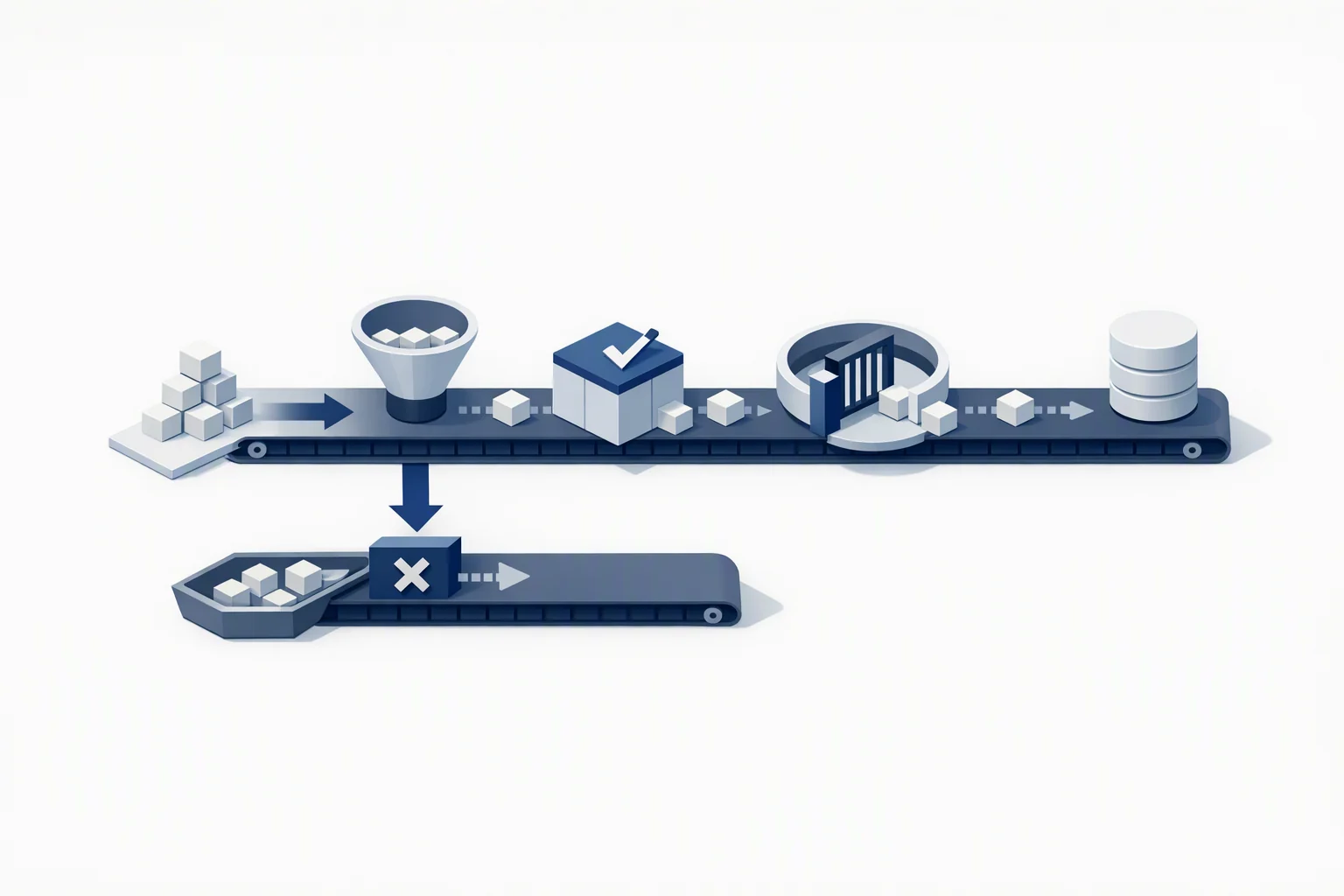
Chiron reads the whole claim as a single continuous record, not eleven separate tools.
The right specialist Digital Employees join the case — gated by the case itself, not by a checklist.
24 authentic California DWC MTUS/ACOEM documents, retrieved and cited, with a hard guardrail on every citation.
PDRS, the §4664 offset, and every statutory deadline run as deterministic engines that override the AI on the number.
Chain-of-Verification: initial answer, adversarial self-questioning, revised final — before a physician sees it.
Review, edit, sign. Nothing reaches a payer, an attorney, or the chart without it — enforced server-side.
SHA-256 binds the signature to the exact document. Anyone holding it can verify it hasn’t been altered.
A California WC claim is a chain of statutes, and most systems treat each link as its own module with its own data entry. Chiron treats the claim as one working record from intake to closure: eligibility and §3600 classification and MPN routing, AOE/COE causation, MTUS/ACOEM-aligned treatment, UR and the RFA under §4610, IMR under §4610.5, the P&S/MMI determination, impairment and apportionment under §§4663–4664, the QME/AME process under §4062, billing and the pay clock under §4603.2, and the defensible record through settlement or closure under §5410.
Because it is one record, the causation finding a physician wrote in month one is still there, unedited, when the impairment rating is computed in month eight — and the reasoning that produced it is still inspectable. One Digital Employee, one working record, one signature standard, across 40 backend modules running in production today.
Chiron leads every case on the medical reasoning. Issac assesses utilization-review denial risk on every case, no exceptions. Justine convenes when the case raises apportionment or mixed causation. Eli convenes when there is a billing dispute. Theo — the bias-and-fairness reviewer — opens automatically whenever Chiron’s own confidence lands below a 70% threshold, with no one having to request it. The Round Table runs its consultations in parallel and degrades gracefully if a specialist can’t reach a conclusion on the record available.
Must review before final
Decision-support output. Clinician review and attestation required before this content is signed into the chart.
Confidence: 66% — below the 70% review threshold, so the ethics review below opened without a request.
Consulted because the case raises apportionment.
Consulted because lead confidence is below the 70% review threshold.
Consulted on every case.
Consulted only when a billing dispute is present - not triggered here.
The reasoner retrieves against 24 authentic California DWC MTUS/ACOEM guideline documents, kept current, rather than reciting a treatment guideline from memory. Ask the Case — the platform’s citation-verified retrieval surface — answers only from the case record plus that guideline corpus, with an inline citation on every claim. A hard, code-level guardrail deletes any citation the model didn’t actually retrieve, so a citation on the screen is a citation that was actually fetched, not a plausible-looking reference. An ICD-10 hallucination guard and a separate apportionment-citation validator run the same check on those two higher-stakes surfaces specifically.
Escobedo
The substantial-evidence standard AOE/COE causation is held to.
Brodie / Strait
The three-prong test the §4664 prior-award offset engine runs.
Hikida
The limit on apportioning impairment the treatment itself caused.
Almaraz / Guzman
When an alternate AMA Guides method may be used instead of DRE.
Dubon / Bodam
Which UR denials are eligible for IMR — gates IMR-eligibility classification.
Vázquez
The good-cause standard for late filings; the generator that builds the filing exhibit.
A handful of outputs in a WC claim cannot be a model’s best estimate — they have to be the same number every time, from the same inputs, and defensible line by line. For those, the platform routes to a deterministic engine instead of the reasoner. If the reasoner drafts its own arithmetic on the way to a conclusion, the deterministic engine’s result overrides it before the physician ever sees a number — pure functions, versioned, and audit-traced back to the inputs that produced them.
Final permanent-disability rating
2005 Schedule: FEC rank → age adjustment → occupational adjustment → final PD.
Combined whole-person impairment across multiple ratings
AMA Guides to the Evaluation of Permanent Impairment, 5th Edition — the California standard.
Prior-award offset against the current rating
The Brodie / Strait three-prong test, applied the same way on every case.
Panel-process step and the evaluation window it triggers
The §4062 / §4062.5 panel sequence, tracked as states, not as free text.
Every statutory clock in the claim
Business-day math against the California DWC holiday calendar, re-run daily at 07:00.
The same deterministic posture applies to time. Each clock below is computed against the California DWC holiday calendar, not a generic business-day count, and re-checked by a daily 07:00 cron that surfaces approaching and overdue items before they lapse.
Every specialist in the Round Table runs Chain-of-Verification on its own output: an initial answer, then a set of adversarial verification questions — did I invent anything not in the record? What would opposing counsel argue against this? Would this survive cross-examination? — and only then a revised final answer. The self-critique happens before the draft ever reaches the physician’s screen.
What the physician sees while this runs is a live, honest reasoning trace: which specialist is working, which guideline it retrieved, which sources it found — a structured account of what happened, not raw model output and not a progress bar faked to look busy.
Defend This takes the same discipline further on request: the platform argues against its own determination first, in the voice of the defense QME, the UR reviewer, or the carrier, and assembles what it can into a submit-ready defense packet — honest about what it can’t yet answer.
Must review before final
Decision-support output. Clinician review and attestation required before this content is signed into the chart.
The must-review-before-final gate is enforced at the data layer, server-side — not a banner a browser could skip. The physician sees the visible reasoning that produced the draft, not just the draft itself, can edit any clause, and only then attests. That review-and-attest step is what AB 3030 / SB 1120 disclosure and AB 489 require, and here it is architecture, not a policy memo: there is no path from an AI draft to the chart, a payer, or an attorney that skips the physician.
The architecture also errs toward the person the process is supposed to protect: if the IMR-eligibility classifier can’t reach a confident answer, it fails open rather than closed, so a worker’s appeal window is never lost to a classification error.
At the moment of attestation, a SHA-256 hash binds the physician’s signature to the exact rendered document — the specific PDF, the specific content, at that specific moment. Four public verification endpoints, one each for IMR, QME, PTP-QME, and closure documents, let anyone holding a copy confirm it hasn’t been altered since it was signed. No login, no PHI in the check, and the endpoints are rate-limited against abuse.
That means a payer, an opposing attorney, a QME, or the DWC itself can verify authenticity independently of ChironAI — the proof doesn’t depend on trusting the vendor that produced the document.
Read the security posture →Across all seven steps, Chiron takes initiative — it reads the whole record, decides which specialists a case needs, retrieves the guideline that supports each claim, and interrogates its own draft before anyone else sees it. That is the agentic part, and it runs without being asked at every step. But twice in every case, the architecture deliberately hands off: the moment a number has to be exact, it hands off to a deterministic engine that cannot drift; the moment a determination has to be made, it hands off to a licensed physician who signs. Agentic reasoning, bounded by two places where the system is built not to decide.
Read: agency, not autonomy →Tell us the workflow you want to see and who needs to be in the room. A member of our clinical and engineering team replies within two business days to arrange it — a real person, not a sequence.
Talk to our team →What happens after you send it
Prefer to talk now? +1 (949) 200-8668, or email hello@mindhyve.ai.